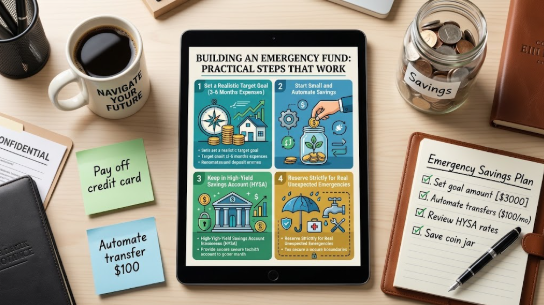
An emergency fund is money set aside specifically for unexpected expenses such as medical bills, car repairs, or temporary job loss. Without this buffer, many people turn to high-interest credit cards or loans, which can create lasting financial pressure.
How Much Should You Aim For?
A common recommendation is three to six months of essential living expenses. Essential expenses typically include housing, utilities, food, transportation, insurance, and minimum debt payments. For someone just starting out, a smaller initial target of $1,000 can provide meaningful protection and build momentum.
The right amount depends on job stability, number of income earners in the household, and health considerations. Dual-income households with stable jobs may feel comfortable with three months of expenses. Someone self-employed or in a volatile industry may prefer a larger cushion.
Where to Keep the Money
Emergency funds should be liquid and safe. High-yield savings accounts offered by online banks are a popular choice because they typically offer higher interest rates than traditional brick-and-mortar banks while still providing easy access. Money market accounts are another option. Avoid investing emergency funds in stocks or other volatile assets, as the money needs to be available without risk of loss when you need it most.
How to Start When Money Feels Tight
Begin with small, automatic transfers. Even $25 or $50 per paycheck adds up over time. Look for one-time sources of cash such as tax refunds, bonuses, or selling unused items. Temporarily reducing discretionary spending can free up additional amounts.
Some people find it helpful to open a separate savings account dedicated only to the emergency fund. Keeping the money out of the everyday checking account reduces the temptation to spend it.
Staying Motivated
Track progress visually. A simple chart or app that shows the growing balance can make the process more encouraging. Celebrate small milestones, such as reaching the first $500 or the first full month of expenses covered.
When to Use the Fund
True emergencies are unexpected and necessary. Routine expenses, planned purchases, or wants do not qualify. After using the fund, make replenishing it a priority.
Building an emergency fund is one of the highest-impact financial habits. It reduces stress and provides options when life takes an unexpected turn. This content is for educational purposes only and should not be considered personalized financial advice.