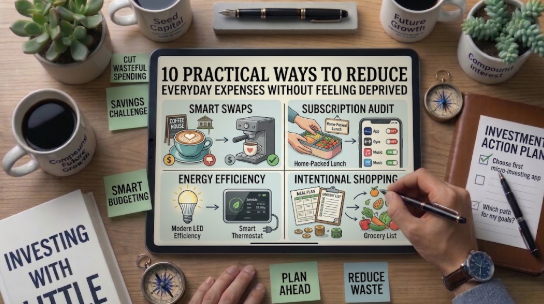
Reducing expenses does not have to mean constant sacrifice. Small, sustainable changes often free up more money over time than dramatic short-term cuts that are hard to maintain. The following ideas focus on areas where many households can find meaningful savings.
1. Review and Cancel Unused Subscriptions
Streaming services, apps, gym memberships, and software trials can quietly add up. Check bank and credit card statements for recurring charges you no longer use. Many people discover $30 to $100 in monthly savings this way.
2. Plan Meals and Shop With a List
Impulse purchases and food waste are expensive. Planning meals for the week, checking the pantry first, and shopping with a list reduces both spending and waste. Buying store brands for staple items and taking advantage of sales on non-perishables can further lower costs.
3. Lower Energy and Utility Bills
Simple habits such as adjusting the thermostat a few degrees, using LED bulbs, washing clothes in cold water, and unplugging devices that draw standby power can reduce monthly utility costs. Sealing drafts and maintaining HVAC systems also help.
4. Rethink Transportation Costs
Combining errands, maintaining proper tire pressure, and exploring carpooling or public transit for some trips can lower fuel and maintenance expenses. For some households, occasionally using ride-sharing or bike options for short trips makes sense.
5. Negotiate Bills When Possible
Insurance, internet, and phone providers sometimes offer better rates to customers who ask. Calling to review current plans or shopping around for competitors can produce lower monthly payments without changing service quality.
6. Embrace Free and Low-Cost Entertainment
Libraries, parks, community events, and free online resources provide plenty of options. Rotating streaming services instead of keeping several at once is another practical approach.
7. Buy Quality Items That Last
Cheap products that need frequent replacement often cost more over time. For items used regularly, investing in durable versions can be more economical in the long run.
8. Use Cash or Debit for Discretionary Spending
Some people find that paying with cash or a debit card makes spending feel more real than using credit, which can reduce impulse purchases.
9. Take Advantage of Employer Benefits
Flexible spending accounts, transportation benefits, and wellness programs can reduce out-of-pocket costs. Reviewing the full benefits package each year is worthwhile.
10. Track Progress and Adjust
Notice which changes feel easy and which feel restrictive. Keep the ones that fit your lifestyle and drop the rest. Sustainable progress matters more than perfection.
These strategies are general suggestions. Individual results vary. This article is for educational purposes and is not personalized financial advice.