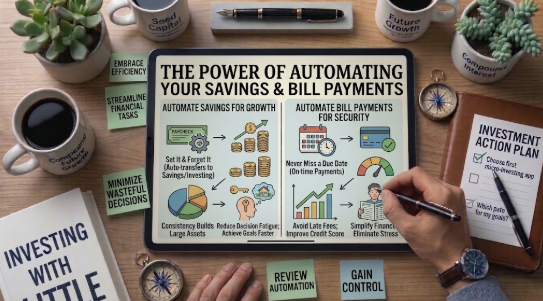
One of the biggest obstacles to consistent saving is the need to make the same decision repeatedly. Automation removes that friction. Once the system is in place, money moves according to your plan without requiring constant attention or willpower.
Why Automation Works
Behavioral research shows that people are more likely to stick with habits that require little ongoing effort. Automatic transfers treat savings like any other bill. The money leaves the checking account before it can be spent on other things. Over months and years, this simple mechanism compounds into significant progress.
Setting Up Automatic Savings Transfers
Most banks and credit unions allow you to schedule recurring transfers from checking to savings on payday or any chosen date. Start with an amount that feels manageable. Even a modest automatic transfer builds the habit and the balance. As income grows or expenses decrease, increase the transfer amount.
Some people split the transfer across multiple goals: emergency fund, vacation fund, or down-payment savings. Separate sub-accounts or digital “envelopes” can help keep the purposes clear.
Automating Bill Payments
Late fees and interest charges are avoidable costs. Setting up automatic payments for rent or mortgage, utilities, insurance, and minimum credit card payments reduces the risk of missed due dates. Keep a small buffer in the checking account so that scheduled payments do not trigger overdrafts.
Review the list of automatic payments periodically. Cancel or adjust any that are no longer needed.
Using Employer Tools
Direct deposit can often be split between multiple accounts. Sending a portion of each paycheck straight into savings or a retirement account is one of the most effective forms of automation. Contribution changes to workplace retirement plans can also be set to increase automatically each year.
Balancing Automation With Awareness
Automation is powerful, but it should not replace occasional reviews. Check account balances and transaction history monthly. Confirm that transfers are occurring as expected and that no unexpected fees have appeared. Adjust the system when income, expenses, or goals change.
Getting Started
Begin with one or two automatic transfers. Add bill payments next. Expand the system gradually so it remains manageable. The less energy required to maintain good financial habits, the more likely those habits are to continue.
Automation is a tool that supports better outcomes for many people. This information is educational and not a substitute for personalized financial guidance.