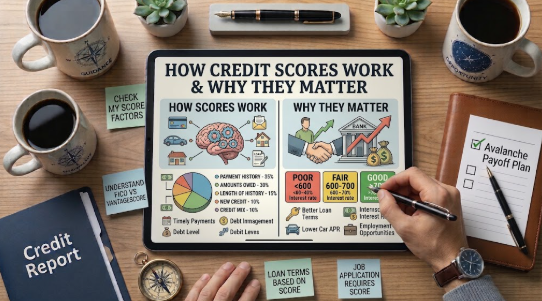
A credit score is a three-digit number that lenders and other institutions use as one indicator of credit risk. Higher scores generally signal lower perceived risk and can lead to more favorable terms on loans, credit cards, and sometimes insurance or rental applications. Understanding the major components of the score helps people focus their efforts productively.
The Main Factors Behind Most Scores
Although exact formulas are proprietary, widely used scoring models typically weigh the following areas:
- Payment history – whether bills are paid on time
- Amounts owed – particularly credit utilization (balances relative to credit limits)
- Length of credit history – how long accounts have been open
- Credit mix – the variety of account types
- New credit – recent applications and newly opened accounts
Payment history and amounts owed usually carry the greatest weight.
Why Scores Matter in Daily Life
Beyond loan interest rates, credit scores can influence approval for apartments, utility deposits, and even some employment background checks. A higher score can translate into lower costs and greater flexibility over many years.
Practical Steps That Often Help
Paying every bill on time is the single most important habit. Setting up automatic payments or calendar reminders reduces the chance of accidental late payments. Keeping credit card balances low relative to limits improves the utilization ratio. Avoiding unnecessary new credit applications prevents hard inquiries that can temporarily lower the score.
Regularly reviewing credit reports from the major bureaus helps catch errors or signs of identity theft. In many countries, consumers are entitled to free annual reports.
What Does Not Help
Closing old accounts in good standing can shorten the average age of credit and reduce available credit, both of which may lower the score. Opening multiple new accounts in a short period often has a similar effect. There is no quick legitimate way to raise a score dramatically overnight.
Credit scoring is complex and individual results vary. This article provides general educational information and is not personalized advice. For questions about a specific credit situation, consider speaking with a reputable credit counselor or financial professional.