Unexpected expenses have a way of showing up at the worst possible time. A car repair, a medical bill, or a sudden job loss can turn a stable month into a stressful scramble. Many people handle these moments by reaching for credit cards or dipping into savings meant for other goals. An emergency fund changes that pattern. It acts as a financial cushion that helps you handle surprises without derailing your longer-term plans. Building one does not require a high income or complicated strategies. It starts with clear goals, consistent small steps, and a realistic plan that fits your life.
What an Emergency Fund Really Is
An emergency fund is money set aside specifically for unplanned expenses or temporary income disruptions. It is not the same as a vacation fund or a down-payment savings account. The purpose is protection. When something unexpected happens, you can cover the cost without adding high-interest debt or selling investments at a bad time.
Common examples include major car repairs, urgent home fixes, medical costs not fully covered by insurance, or a period of reduced income. The fund works best when it stays liquid and separate from everyday spending money. Treating it as untouchable for non-emergencies helps it stay available when you truly need it.
How Much Should You Aim to Save
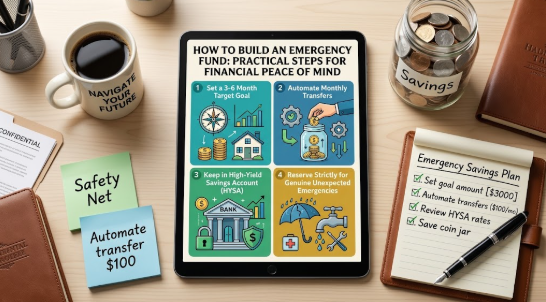
A widely used guideline is to save enough to cover three to six months of essential living expenses. Essentials usually include housing, utilities, food, transportation, insurance, and minimum debt payments. The exact amount depends on your situation. Someone with stable employment and few dependents may feel comfortable closer to three months. A person with variable income or higher fixed costs might prefer a larger buffer.
Start by listing your monthly must-pay expenses. Multiply that total by three to get a starter target. You can always expand later. The first goal is often the hardest, so many people begin with a smaller milestone, such as $500 or $1,000. Reaching that first number builds momentum and confidence.
Where to Keep the Money
The ideal place balances safety and easy access. A high-yield savings account at an online bank or credit union often works well. These accounts typically offer higher interest rates than traditional brick-and-mortar savings accounts while keeping funds liquid. You can usually transfer money to your checking account within a day or two.
Avoid locking the money in certificates of deposit or long-term investments if the primary purpose is emergencies. Those options can create penalties or delays when you need cash quickly. Keep the account separate from your everyday checking so the balance does not get mixed with regular spending. Labeling the account clearly, such as “Emergency Fund,” can serve as a helpful mental reminder.
Practical Ways to Start Building Your Fund
Consistency matters more than large one-time deposits. Automating transfers is one of the most effective habits. Set up a recurring transfer from your checking account to the emergency savings account on payday. Even $25 or $50 per paycheck adds up over time.
Look for small opportunities to free up cash. Review subscriptions you no longer use, pack lunch a few days a week, or sell items you no longer need. Redirecting a tax refund or year-end bonus can also give the fund a meaningful boost. Track progress monthly so you can see the balance grow and stay motivated.
If your income fluctuates, consider percentage-based contributions. Saving a fixed percentage of each paycheck keeps the habit going even when the amount changes. Pair this with a simple spending review each month to identify areas where small adjustments are possible without feeling restrictive.
Common Mistakes to Avoid
One frequent misstep is treating the emergency fund as a flexible spending account. Using it for planned expenses or non-urgent wants weakens its purpose. Another is keeping the money in an account that is too easy to access for everyday purchases, which increases the temptation to dip into it.
Some people wait for the “perfect” time or a large windfall before starting. Waiting often delays progress indefinitely. Starting small and adjusting as circumstances change is usually more effective. Finally, neglecting to revisit the target amount as life changes can leave the fund outdated. A new job, a move, or added family responsibilities may call for an updated savings goal.
Keeping the Fund Healthy Over Time
Once you reach your initial target, the work is not finished. Life changes, and so do expense levels. Review the fund once or twice a year. If your essential costs have risen, consider increasing the balance gradually. After using the fund for a true emergency, make a plan to rebuild it. Treat replenishment as a priority similar to the original savings process.
Interest earned in a high-yield savings account can help the balance grow slowly over time, but the main value remains the protection it provides. Avoid the urge to invest the emergency fund for higher potential returns. The priority is stability and availability, not maximizing growth.
Building an emergency fund is less about perfection and more about creating a reliable safety net. Small, steady actions compound into meaningful security. The peace of mind that comes from knowing you can handle an unexpected bill without financial strain is often the greatest return of all.
This information is for educational purposes only and should not be considered personalized financial advice. Consider consulting a qualified professional for guidance specific to your situation.